


-
Departments
DepartmentsDepartments
Your cart is empty
Looks like you haven't added anything to your cart yet



Warm or Cool Bathroom Lights: Which Is Best for Your Home?
Ever stood in front of your bathroom mirror and thought the light just isn't doing you any favours? You're not alone. Picking the right bathroom lights trips up a lot of people. It's usually the same question every time: warm light or cool light?
The right answer comes down to your bathroom's layout. It also depends on how your household uses the room and the kind of mood you want when you walk in.
This guide breaks down the difference between warm and cool bathroom lights in Sydney. It also covers how to pick the right LED downlights and where exhaust fans and vanity lighting fit in.
Why Choosing the Right Bathroom Lighting Matters
How bathroom lighting affects comfort and functionality
The bathroom gets used more than almost any other room in the house. It's also not very forgiving when the lighting is off. Too dim, and you're guessing while shaving or doing makeup. Too harsh, and even a quick morning shower feels a bit cold and stark.
Good bathroom lighting needs to do two jobs at once. It has to give you clear, even light for tasks. And it still has to feel comfortable, rather than like a doctor's waiting room.
The impact of colour temperature on your daily routine
Colour temperature is measured in units called kelvins (K). It describes how warm or cool a light looks. Lower numbers give a soft, yellowish light, a bit like candlelight. Higher numbers give a crisper, blue-white tone with more of that daytime brightness to it.
Worth mentioning, colour temperature has nothing to do with actual heat. A cool-toned bulb won't run any hotter than a warm one. But it does change how you feel in the room.
Common lighting mistakes homeowners make
A few mistakes show up again and again in bathroom renovations:
-
One light in the middle of the ceiling and nothing else, which leaves shadows on your face in the mirror.
-
Picking a light colour that clashes with the tiles or benchtop.
-
Skipping proper lighting near the vanity completely.
-
And forgetting the exhaust fan, which matters a lot in a room that deals with steam and moisture every single day.
What Is the Difference Between Warm and Cool Bathroom Lights?
Warm light is lower on the Kelvin scale, usually around 2700K to 3000K. It gives off that familiar yellow-amber glow. Cool light sits higher, usually 4000K to 5000K or more. It looks like a crisp blue-white, closer to natural daylight. The higher the number, the cooler the light looks.
In a bathroom, this actually matters. Warm light softens things and works well for a relaxed, spa-type feel. Cool light sharpens detail and contrast. That's what you want when you're standing right in front of the mirror.
Cool Bathroom Lights: Benefits and Best Uses
Cool white light, roughly 4000K to 5000K, is often the practical pick for bathrooms. It's close to daylight, so it's easier to tell how makeup or skin tone actually looks once you step outside. It also helps you judge how close a shave really is.
On top of that, it tends to make a small bathroom feel brighter and a bit bigger. Cool light works well:
-
Around vanity mirrors, where you need clear colour and no shadows, a cool-toned LED vanity light is built for exactly this.
-
In bathrooms mostly used in the morning, where you want that alert, wide-awake feel.
-
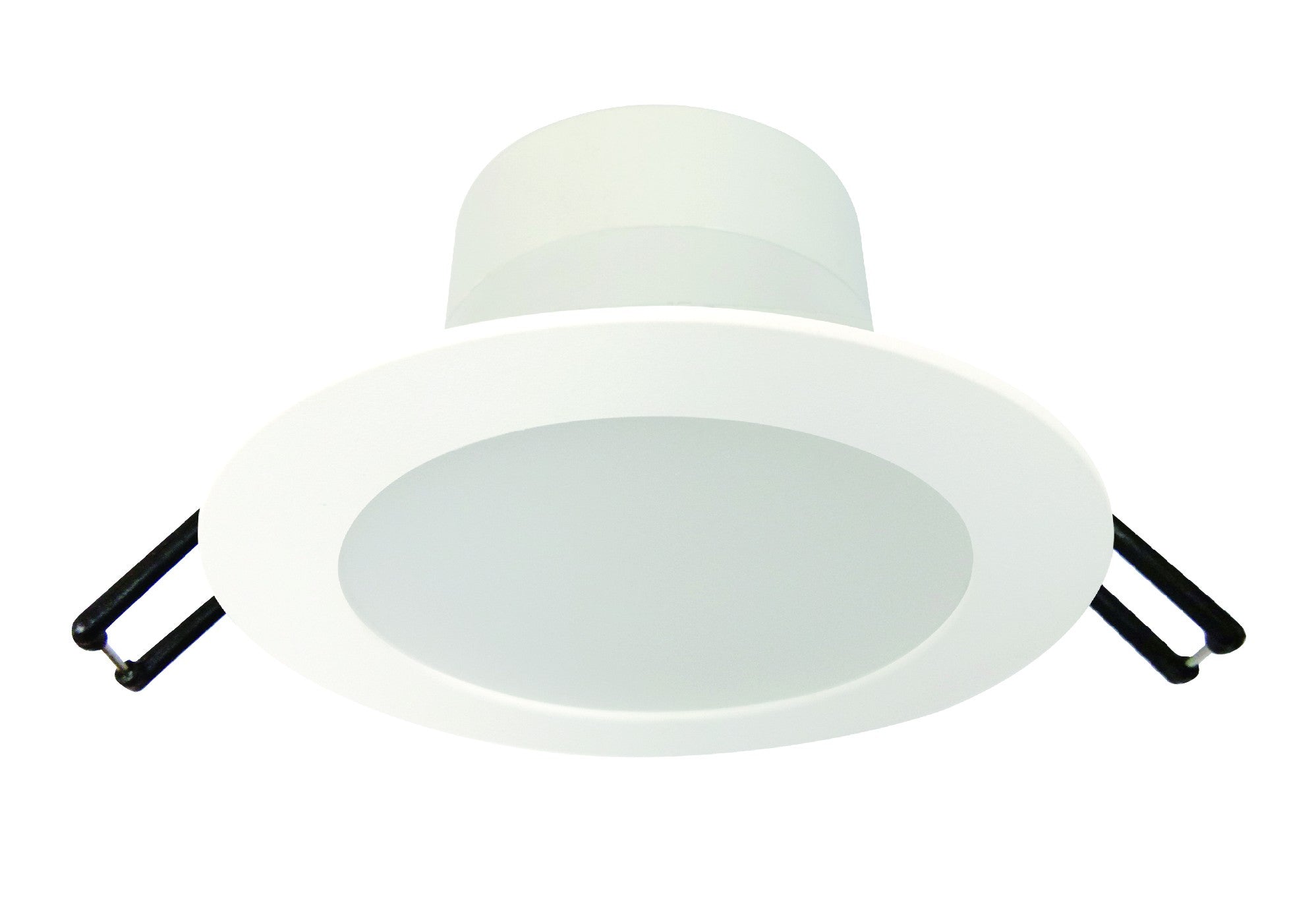
In small or windowless bathrooms, where the extra brightness helps, a compact LED downlight is a solid option here.
Warm vs Cool Bathroom Lights: Which Is Better?
There's no single right answer here. It depends on how your household actually uses the room. Warm light suits a long bath or an evening skincare routine. It also works well for just winding down before bed.
Cool light suits grooming tasks like shaving or makeup. It's also handy for getting ready in a rush before work.
A lot of bathrooms end up better off with a mix of both, rather than picking one extreme. Cool, focused light around the mirror, paired with something a bit warmer for the rest of the room. Or you could just install a dimmable fitting. That way, it can shift between the two depending on the time of day.
What Is the Best Colour Temperature for Bathroom Lights?
For most Australian bathrooms, somewhere around 3500K to 4000K is a good middle ground. It's bright enough for grooming, without going full stark blue-white as a 5000K bulb can. If your bathroom leans more toward a relaxing, hotel-style feel, try dropping to 3000K around the bath area. Keep 4000K near the mirror, though. That combination tends to work well.
How to Choose the Right Bathroom Lights for Your Home
A few things worth thinking through before you buy anything:
Layer your lighting
Use ceiling downlights for general lighting. Then add a dedicated vanity or wall light on either side of the mirror, so you're not left with shadows on your face.
Match the fitting to how wet the room gets
Bathroom lights Sydney need a proper water resistance rating, called an IP rating. This matters because they deal with steam and splashes that other rooms don't. Look for downlights and wall lights rated IP44 or higher for anything near a bath or shower.
Go LED where you can
LED downlights and vanity lights use less power and run cooler. They also last a lot longer than old halogen or incandescent bulbs. That adds up in a room you switch on multiple times a day.
Don't skip the exhaust fan
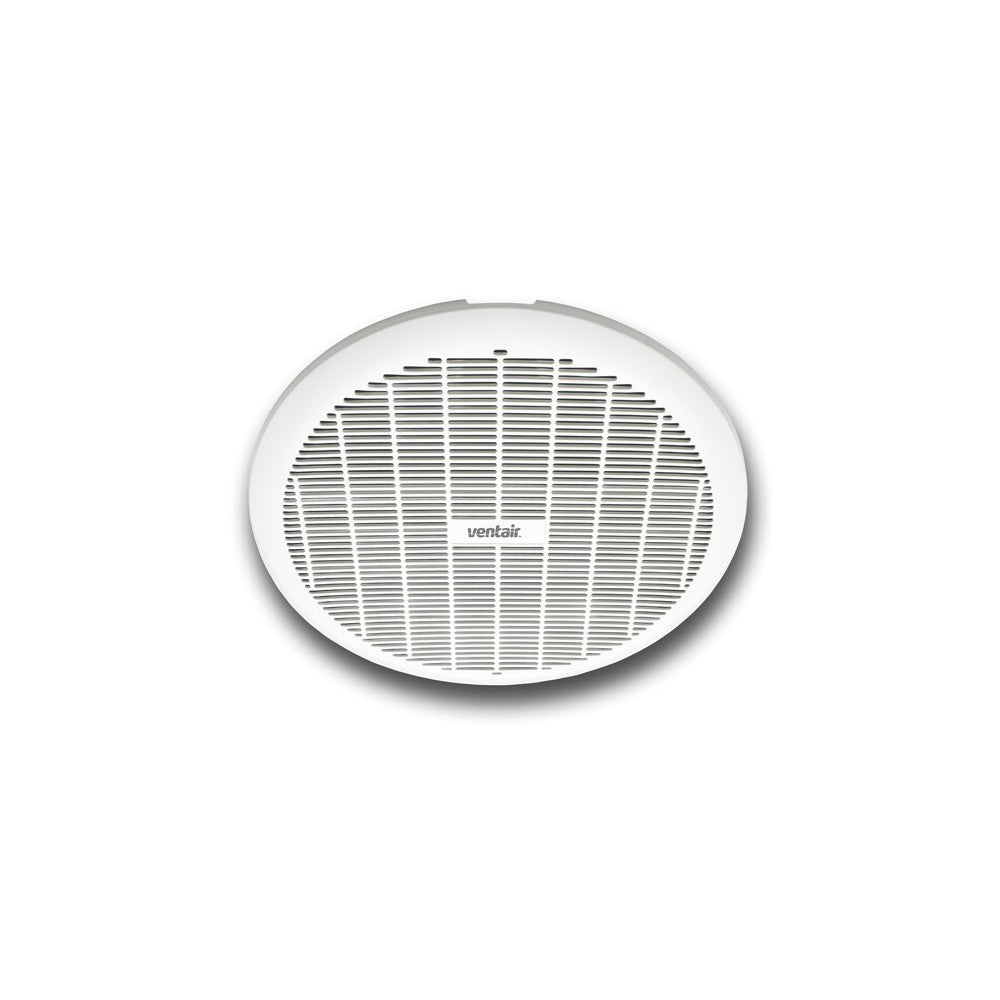
It controls moisture, which protects your lights and the rest of your renovation. A combined light and exhaust fan unit is one option.
Consider a dimmer
It gives you a bright, functional light in the morning. Then it gives you a softer one at night, without needing two separate setups.
How Lighting Centre Helps You Choose the Right Bathroom Light
Lighting Centre has a dedicated bathroom lights range, split into two easy categories.
-
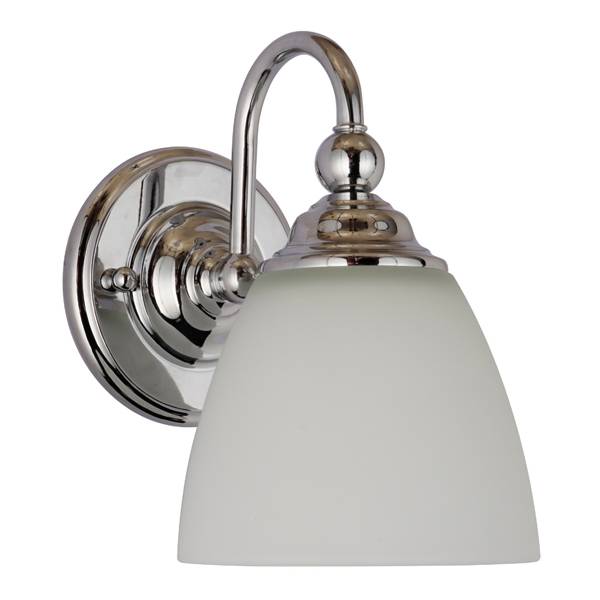
Vanity Wall Lights for mirror and task lighting
-
3-in-1 units for combined light, fan, and heat fittings
There's something for every budget too. Budget-friendly exhaust fan and light combos on one end. Premium LED vanity fittings in black, white, or chrome on the other. And in between, tri-colour vanity wall lights in a few different lengths, depending on your mirror size.
For the ceiling, there's a separate LED Downlights collection. It's packed with moisture-rated, tri-colour options from a range of brands.
Whether you need a crisp cool white vanity light for a busy family bathroom, or something softer that can shift moods through the day, there's a good range of colour temperatures, finishes, and price points to pick from.
If you're in Sydney and looking for bathroom lights built for local conditions, filtering by product type, brand, or price on the collection page is probably the quickest way to narrow it down. Or drop by the showroom to see the finishes in person.
Final Thoughts: Warm or Cool Bathroom Lights?
There's no single right answer for warm versus cool bathroom lighting. As a rough rule, cool light earns its place around the mirror where clarity matters. Warm light suits a more relaxed, evening feel. A lot of bathrooms end up working best with a mix of both, layered with dimmers or tri-colour LEDs, rather than picking one and sticking with it everywhere.
If you're planning a bathroom update, have a look through the Lighting Centre's bathroom lights, LED downlights, and exhaust fans. You'll likely find something that fits both how you use the room and how you want it to look.
Frequently Asked Questions
What colour temperature is best for bathroom lights?
Most Australian bathrooms do well with something around 3500K to 4000K. It's clear enough for grooming, without feeling too harsh.
Is 3000K or 4000K better for bathrooms?
3000K gives a warmer, softer glow. It's better for a relaxing bath or evening routine. 4000K is brighter and more neutral. It works better around the vanity mirror for everyday tasks.
Can I mix warm and cool lighting in a bathroom?
Yes, plenty of people do. Cool light around the mirror, warmer light elsewhere in the room.
Which bathroom lights are best for makeup?
Cool, even lighting at eye level on either side of the mirror works best. Avoid a light straight overhead. It gives you the clearest view with the least shadowing.
Are LED downlights suitable for bathrooms?
Yes, as long as they have the right water resistance rating for where they're going. LED downlights are efficient and last a long time. They also handle bathroom moisture well.
Should bathroom lights match the rest of the house?
Not essential, but it can help. Keeping a similar colour temperature to nearby hallways or bedrooms makes the switch between rooms feel a bit more natural, especially at night.
What IP rating do bathroom lights need?
Depends on the zone. Fittings right over a shower usually need a higher rating, IP44 and above, to handle direct water. Lights further from wet areas can often get away with less. Still worth checking local wiring rules, or just ask a licensed electrician about your specific bathroom.
- Choosing a selection results in a full page refresh.